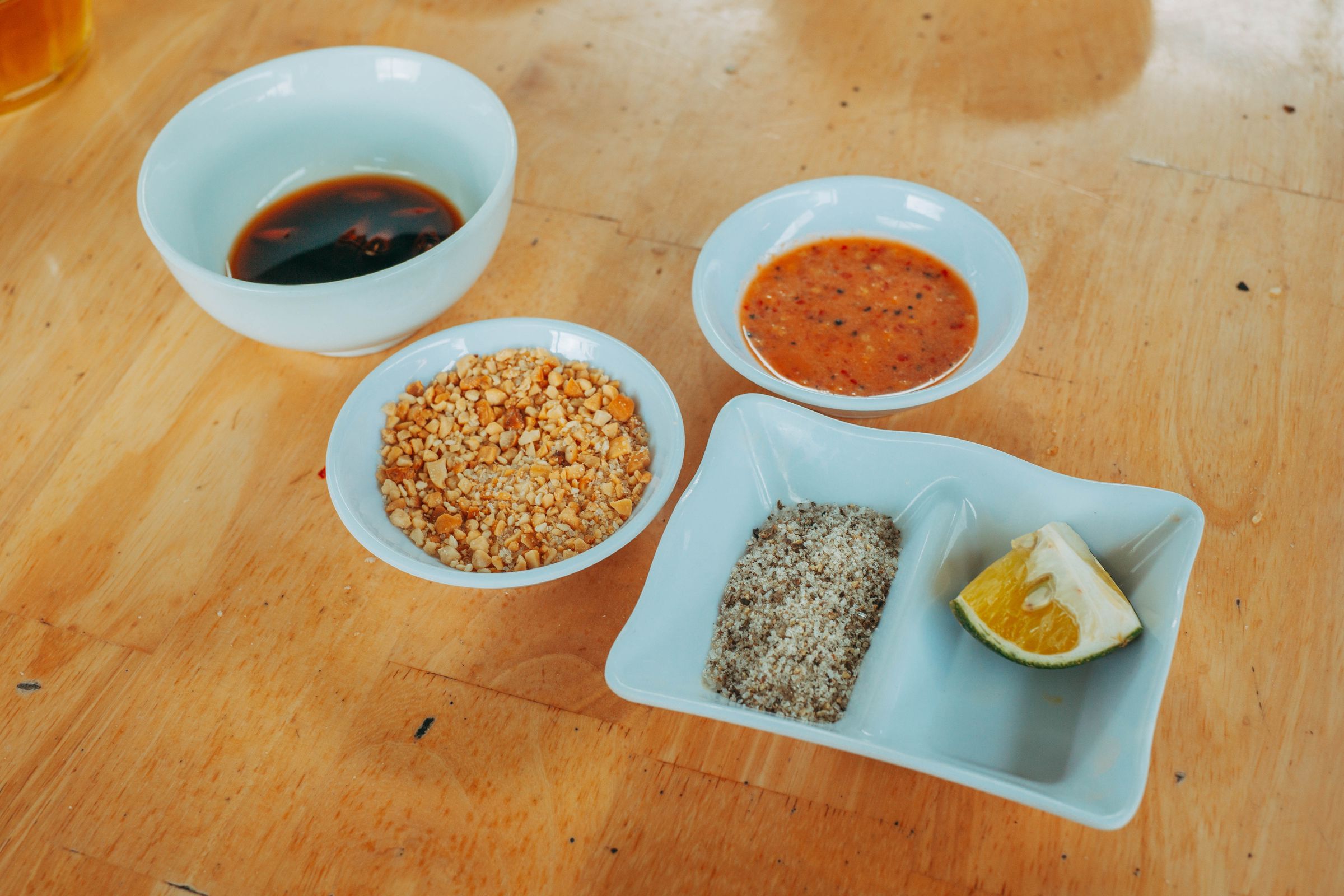
Short answer: The allergens you'll meet most often in Vietnamese food are fish (fish sauce is in almost every savoury dish), peanuts (sprinkled on noodles, salads and desserts), shellfish (shrimp, crab, snails and fermented shrimp paste), soy, wheat (banh mi, egg noodles, soy and oyster sauce), egg and sesame. Dairy is rare in savoury food but common in coffee and desserts. If you have a serious allergy, carry a written allergy card in Vietnamese, choose simple dishes you can check, beware of hidden sauces and shared woks, bring at least two adrenaline auto-injectors from home, and remember the ambulance number, 115.
We guide food tours in Hanoi and plan around guests' allergies every week. This is practical, experience-based advice, not medical advice. Please speak to your doctor or allergist before you travel. Last updated: November 2026.
Allergen by Allergen: What to Watch Out For
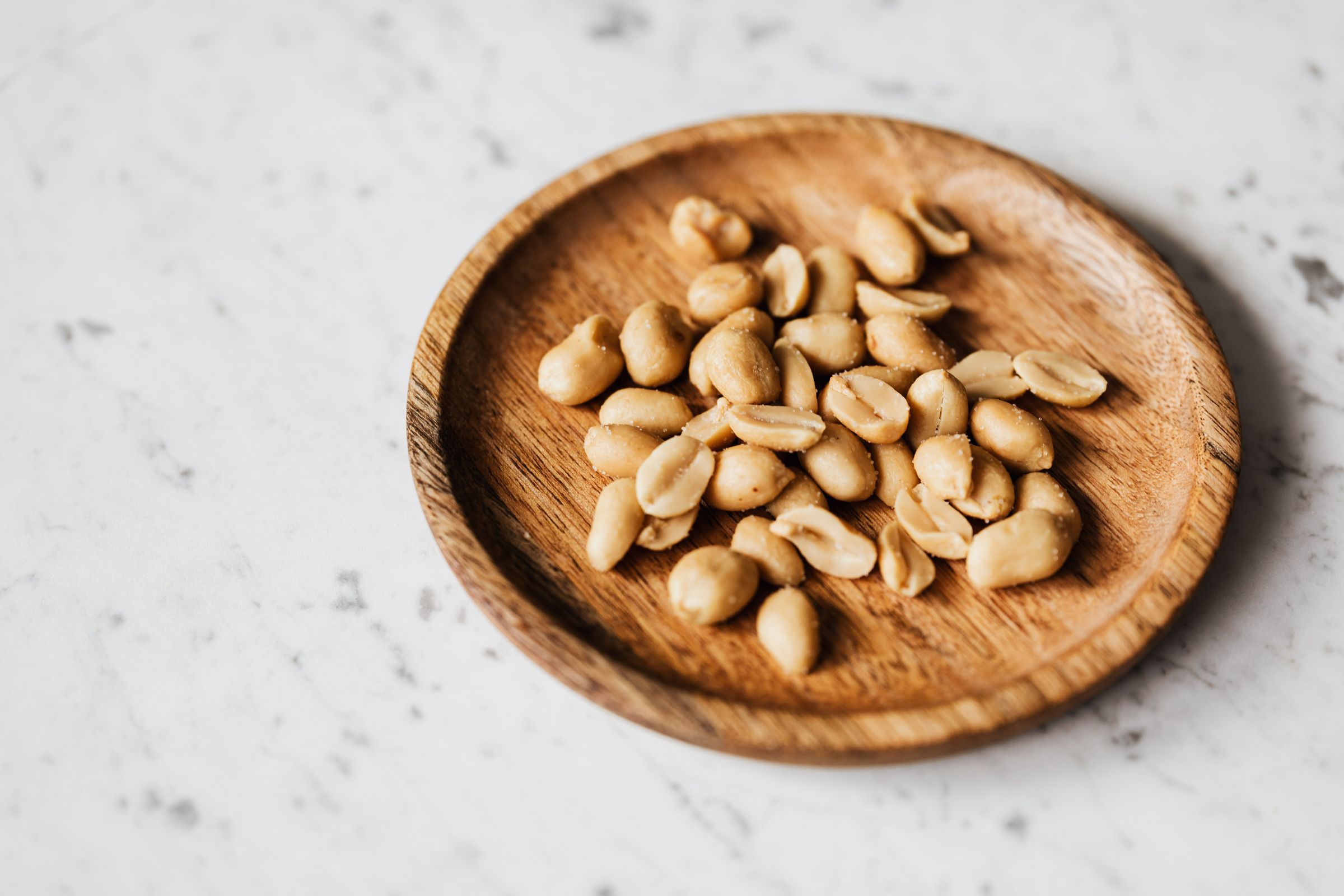
Peanuts (lạc / đậu phộng)
- Often in: dry chicken pho (phở gà trộn), bún bò Nam Bộ, papaya and beef salads (nộm), cha ca, the dipping sauce for fresh spring rolls, some sticky rice and sweet soups
- Hidden risks: crushed peanuts added as a final garnish, peanut-based sauces and sometimes peanut oil for frying
- Lower-risk choices to discuss with the cook: beef pho (phở bò), banh cuon and bun cha don't traditionally include peanuts. Still ask, and check the toppings tray.
Shellfish and crustaceans (tôm, cua, ốc)
- Often in: crab noodle soup (bún riêu), snail noodles (bún ốc), West Lake shrimp fritters, crab spring rolls (nem cua bể), seafood hotpots
- Hidden risks: mắm tôm (fermented shrimp paste) with bun dau and cha ca, dried shrimp in broths such as bun thang, oyster sauce (dầu hào) in stir-fries, and shrimp crackers
Fish (cá and nước mắm)
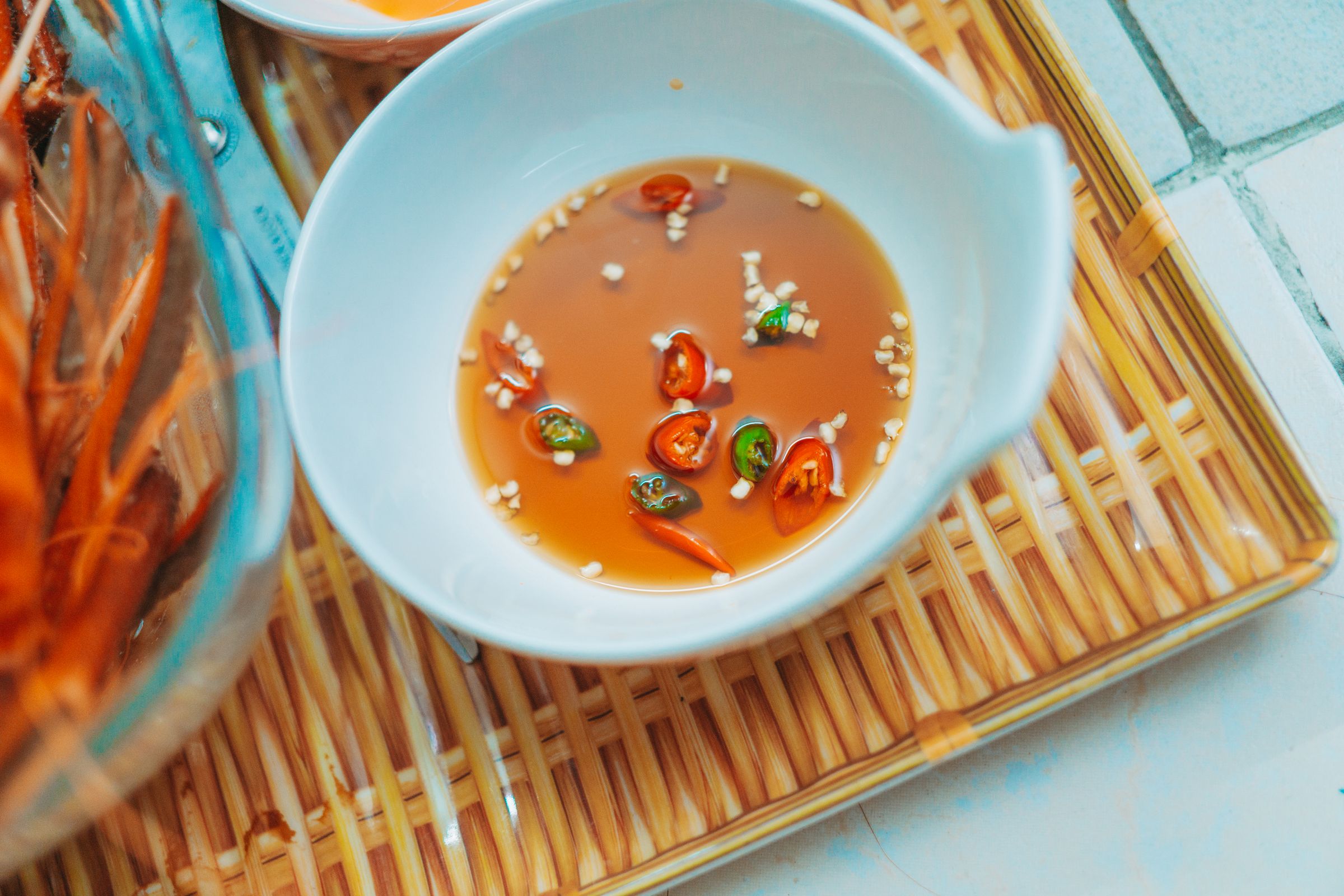
- Often in: fish sauce (nước mắm) appears in dipping sauces, marinades, broths and stir-fries, which means nearly every savoury dish. Also cha ca and fish noodle soup (bún cá).
- Reality check: a strict fish allergy is the hardest to manage in Vietnam. Dedicated vegetarian (chay) restaurants, which use soy-based sauces instead, are often the most practical option.
Soy (đậu nành)
- Often in: tofu (đậu phụ), soy sauce (xì dầu), soy milk, and the mock meats used in vegetarian restaurants
Wheat and gluten (lúa mì)
- Often in: banh mi, yellow egg noodles (mì), soy sauce, oyster sauce, batters, fried dough sticks served with pho (quẩy), and mock meats
- Good news: many staples are rice-based, including pho noodles, bun vermicelli, banh cuon and sticky rice. Sauces and cross-contact are the main issues, so this suits a gluten-free diet more than coeliac disease.
Egg (trứng)
- Often in: egg coffee, egg-filled banh cuon, spring rolls (egg binds the filling), bun thang (egg ribbons), fried rice, banh mi with fried egg, and batters
Sesame (vừng / mè)
- Often in: sweet fried doughnuts (bánh rán), sesame salt sprinkled on sticky rice (muối vừng), black sesame soup (chè vừng đen), and some breads and crackers
Dairy (sữa)
- Often in: condensed milk in Vietnamese milk coffee (nâu, cà phê sữa), egg coffee and coconut coffee, plus yoghurt (sữa chua), ice cream and some sweet soups. Savoury Vietnamese food rarely contains dairy.
Tree nuts (hạt điều, etc.)
- Often in: cashews in some stir-fries and snacks, plus nut-based sweets. Less common than peanuts, but worth asking about.
Why Cross-Contact Is the Biggest Risk
- Shared woks, oil and utensils: street kitchens are tiny, and one wok or fryer may cook everything.
- Garnish trays: crushed peanuts, fried shallots and herbs sit side by side.
- Pre-mixed sauces: the dipping sauce is usually made in a big batch in the morning.
- Language: "allergy" can be heard as "preference". Make the severity clear (see the phrases below).
If even trace amounts could cause a severe reaction, be realistic. Choose restaurants where you can speak to the kitchen, eat dishes cooked fresh in a clean pan, and consider skipping street stalls for your highest-risk allergens.
Vietnamese Allergy Phrases: Show This to the Cook
- Tôi bị dị ứng nặng với ___. I have a severe allergy to ___.
- Nếu ăn phải, tôi có thể phải đi cấp cứu. If I eat it, I may need emergency treatment.
- Món này có ___ không? Does this dish contain ___?
- Xin đừng cho ___ vào món ăn, kể cả nước chấm. Please don't put ___ in the food, including the dipping sauce.
- Tôi bị sốc phản vệ. Gọi cấp cứu! I'm having anaphylaxis. Call an ambulance!
Allergen words to fill in the blank:
- lạc (northern) / đậu phộng (southern): peanut
- tôm: shrimp; cua: crab; hải sản có vỏ: shellfish
- cá: fish; nước mắm: fish sauce; mắm tôm: shrimp paste; dầu hào: oyster sauce
- đậu nành: soy; xì dầu: soy sauce
- lúa mì: wheat; trứng: egg; sữa: milk
- vừng (northern) / mè (southern): sesame; hạt điều: cashew
Print the phrases on a card, or save a screenshot, and show it before you order. Cooks are usually very willing to help when they understand it's serious.
Before You Travel to Vietnam With a Food Allergy
- See your doctor or allergist and ask for a written emergency plan.
- Bring at least two adrenaline (epinephrine) auto-injectors if prescribed, plus a doctor's letter for customs. Don't count on buying them in Vietnam.
- Pack antihistamines and any other medication your doctor recommends, in original packaging.
- Buy travel insurance that covers your pre-existing condition.
- Prepare an allergy card in Vietnamese (use the phrases above).
- Know where the nearest international hospital is to your hotel.
In an Emergency in Hanoi
- Follow your emergency plan and use your auto-injector if needed.
- Call 115 for an ambulance. In heavy traffic, a taxi or Grab car straight to a hospital emergency department (cấp cứu) can be faster. Ask your hotel or guide to help.
- International-standard hospitals and clinics include the Hanoi French Hospital (1 Phuong Mai St), Vinmec Times City International Hospital (458 Minh Khai St) and Family Medical Practice Hanoi (298I Kim Ma St). Bach Mai Hospital (78 Giai Phong St) is a major public hospital.
Eating Hanoi Street Food With an Allergy: How a Guide Helps
On our Private Hanoi Walking Street Food Tour, we ask about allergies and how severe they are before booking. Because the tour is private, we can change the route and dishes. For example, dry chicken pho (peanuts) and sweet banh ran doughnuts (sesame) can be swapped for other dishes. Your guide explains your allergy to each cook in Vietnamese. We'll also be honest with you: cross-contact can happen in local kitchens, and nobody can guarantee an allergen-free street food environment. For severe allergies, we'll talk through whether a tour is right for you.
Frequently Asked Questions
Is Vietnamese food safe for people with a peanut allergy?
It can be managed with care. Peanuts are a common garnish and appear in some sauces, so always ask, avoid dishes where peanuts are standard, and watch for shared garnish trays. Carry your auto-injectors and an allergy card in Vietnamese.
Is fish sauce in everything in Vietnam?
Almost every savoury dish includes fish sauce somewhere, in the broth, the marinade or the dipping sauce. With a fish allergy, vegetarian (chay) restaurants that use soy-based sauces are usually the most practical choice.
Can I travel in Vietnam with a shellfish allergy?
Yes, with precautions. Avoid crab and snail soups, shrimp fritters and anything with mắm tôm (shrimp paste). Ask about dried shrimp in broths and oyster sauce in stir-fries.
Is Vietnamese food gluten-free?
Many dishes are rice-based (pho, bun, banh cuon, sticky rice), but soy sauce, oyster sauce, batters, banh mi and egg noodles contain wheat. With coeliac disease, cross-contact in shared kitchens is a real concern.
Can I buy an EpiPen in Vietnam?
Don't rely on it. Adrenaline auto-injectors aren't something you can count on finding at a local pharmacy. Bring enough from home, at least two, with a doctor's letter.
What is the emergency number in Vietnam?
115 for an ambulance, 113 for police and 114 for fire.
Related Guides
Checked in November 2026 and based on our experience guiding food tours in Hanoi. This article is general travel information and is not medical advice. Always follow the advice of your own doctor or allergist.

Leave a Reply
Your email address will not be published. Required fields are marked *