Short answer: In Hanoi, the most authentic Vietnamese food is at family-run, one-dish street shops (pho, bun cha, banh cuon) and at cơm bình dân canteens, where locals pick from home-style dishes over rice. For a sit-down meal, try home-style restaurants like Mammom (23 Phan Dinh Phung St) or Mậu Dịch Số 37 (136G Tran Vu St), both MICHELIN Bib Gourmands. For a special night, Tầm Vị (4B Yen The St) and Gia (61 Van Mieu St) hold MICHELIN stars for Vietnamese cooking. To go deeper, eat with a local who can order the dishes that never appear on English menus.
This guide comes from the MaxofHanoi team, Hanoi locals who guide food tours in the city. Last updated: November 2026.
What Does "Authentic Vietnamese Food" Mean in Hanoi?
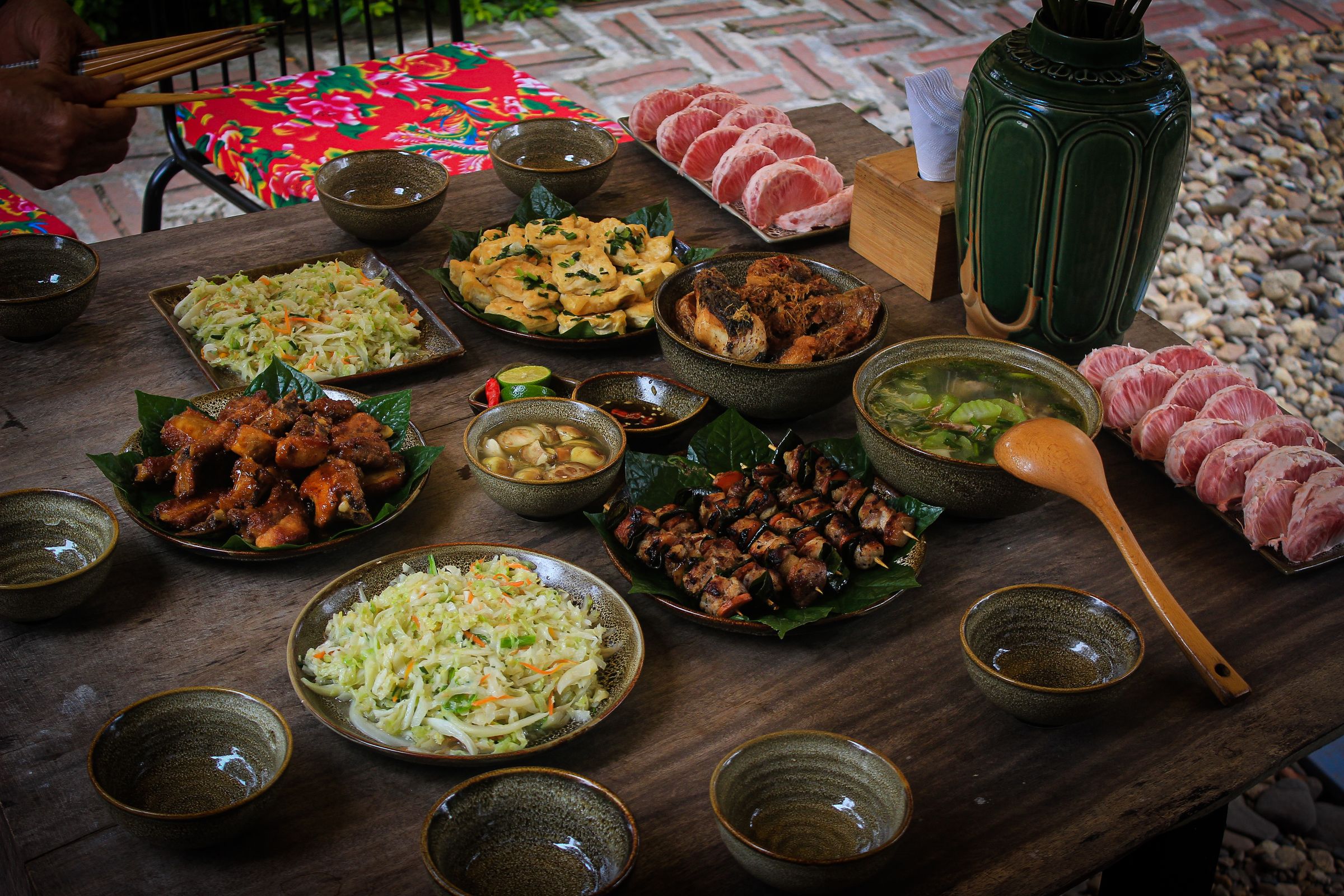
Vietnamese food changes a lot from north to south. Hanoi's cooking, often called northern or Bắc cuisine, is known for:
- Balance over punch: less sugar and chilli than in the south. Heat and sourness are added at the table to your taste.
- Clear broths simmered for hours, the foundation of pho, bun thang and bun rieu.
- Fresh herbs and fish sauce with almost every meal.
- Seasonality: green rice (cốm) in autumn, snail and crab soups in summer, hot pots in winter.
Hanoi is also the capital, so you'll find authentic dishes from Hue and the south here too. "Authentic" doesn't mean "only Hanoi". It means the food is cooked the way Vietnamese people cook it for themselves.
6 Places to Eat Authentic Vietnamese Food in Hanoi
1. Family-run, one-dish street shops
The purest form of Hanoi food. A family makes one dish, often for two or three generations, and sells it until the pot is empty. Examples include Phở Gia Truyền Bát Đàn (49 Bat Dan St) for beef pho, Bánh Cuốn Thanh Vân (14 Hang Ga St) for steamed rice rolls since 1973, Tuyết Bún Chả 34 (34 Hang Than St) for bun cha, and Bún Thang Bà Đức (48 Cau Go St) for bun thang in the evening.
- Price: 35,000–90,000 VND per dish
- Tip: "gia truyền" on a sign means "family recipe passed down"
2. Cơm bình dân: the everyday Vietnamese canteen
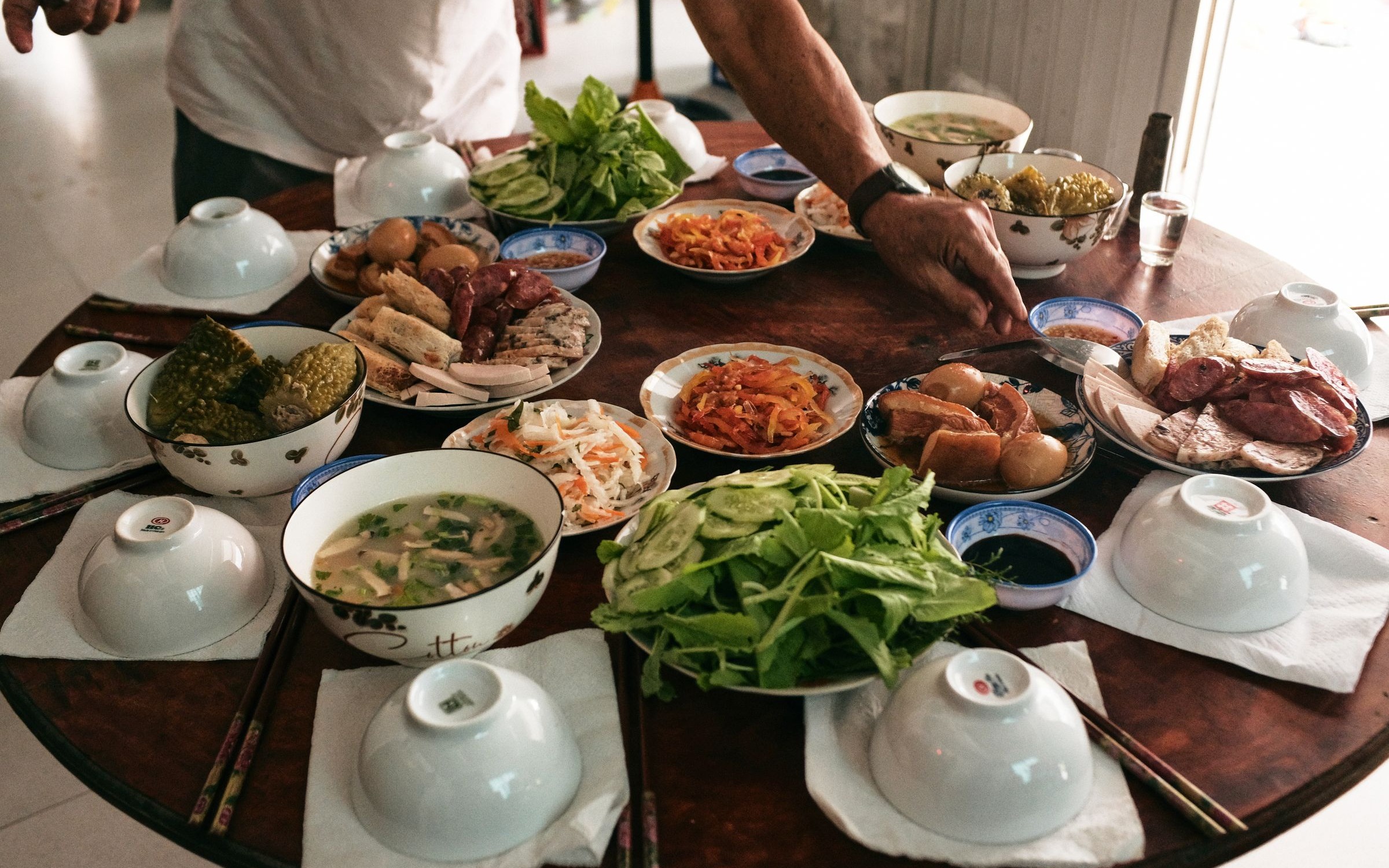
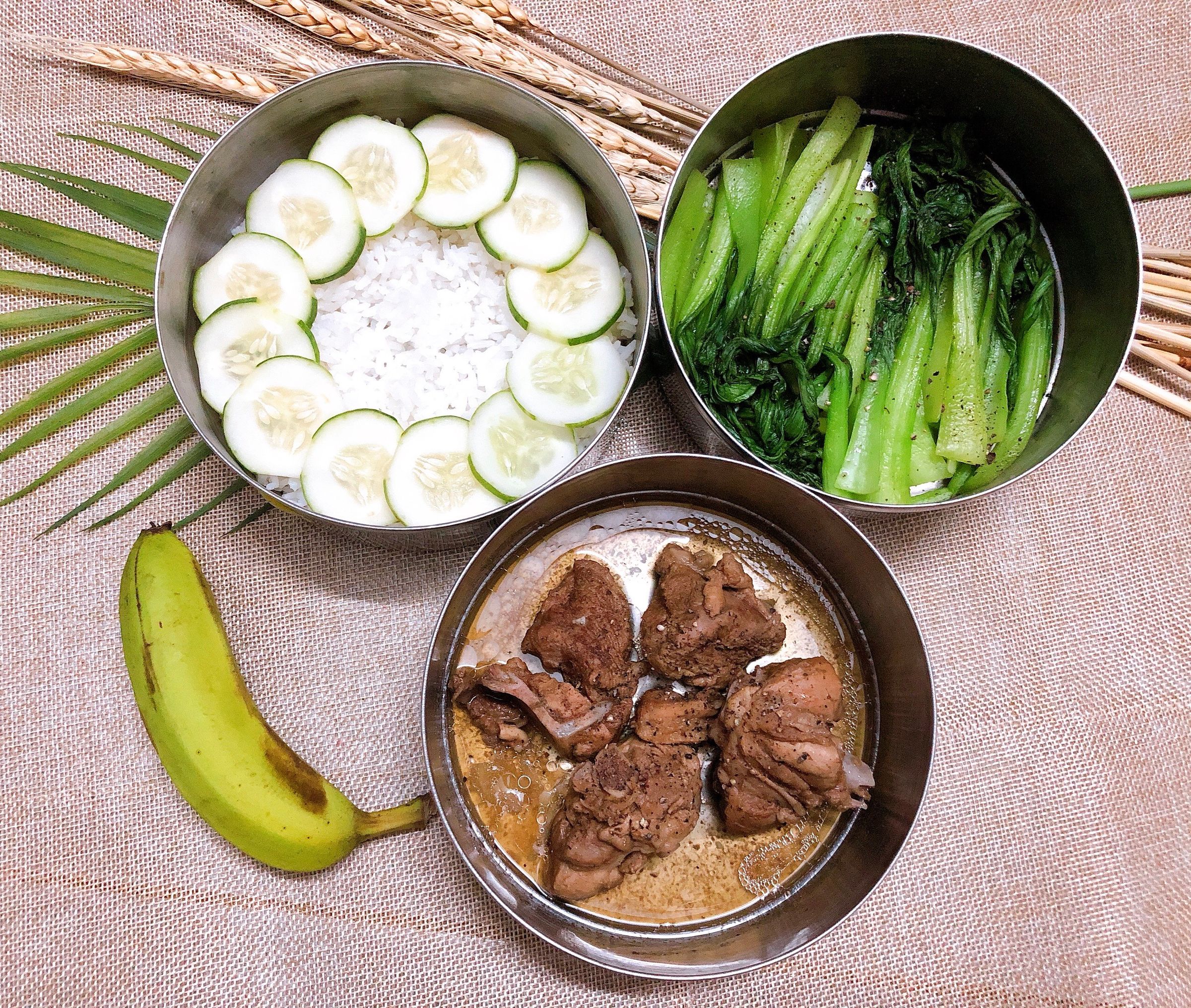
This is what Hanoi's office workers really eat for lunch. A glass counter holds a dozen or more home-style dishes: caramelised pork and egg (thịt kho trứng), fried tofu in tomato sauce, braised fish, stir-fried morning glory, pickles and soup. You point at two or three dishes and they're served over rice. Nothing on the menu is made for tourists.
- Price: about 35,000–70,000 VND for a full plate
- Best time: 11:00–13:00, when everything is freshly cooked
- How to order: point, say "cái này" (this one), and ask "bao nhiêu tiền?" (how much?) before you sit down
3. Home-style Vietnamese restaurants
If you prefer a table, air conditioning and a menu with photos, these places cook the dishes Vietnamese families eat at home:
- Mammom (23 Phan Dinh Phung St): a new MICHELIN Bib Gourmand in 2026, inspired by mothers' home cooking, with nearly 100 dishes from the north, centre and south. Good for groups and for booking ahead.
- Mậu Dịch Số 37 (136G Tran Vu St, Truc Bach): a MICHELIN Bib Gourmand recreating the state canteens of the 1980s "subsidy era". You buy vouchers at the counter, and there's vintage decor and classic northern dishes.
- Quán Ăn Ngon (18 Phan Boi Chau St): a long-running garden restaurant where cooks at individual stations prepare street-food classics. It's a comfortable way to try many dishes in one sitting, though it's busier with visitors.
4. Markets and food alleys
Markets are where Hanoians shop for the day's ingredients, and the food counters inside feed the traders. Dong Xuan Market and the alley beside it, the small Hang Be morning market, and neighbourhood markets like Chau Long serve noodle soups, sticky rice, sweet soups and snacks at local prices. See our hidden street food guide for the best alleys.
5. Bia hơi and nhậu: Vietnamese drinking food
Nhậu means eating and drinking with friends, and it's central to Vietnamese social life. At a bia hơi (fresh draught beer) spot, groups share plates of nem chua rán (fried fermented pork), grilled squid, nộm (salads), boiled peanuts and tofu. Avoid the tourist strip on Ta Hien St if you want local prices. Neighbourhood bia hơi places in the late afternoon are the real thing.
6. Modern Vietnamese fine dining (MICHELIN-starred)
For a special occasion, two of Hanoi's MICHELIN-starred restaurants focus on Vietnamese cooking:
- Tầm Vị (4B Yen The St): traditional northern Vietnamese family dishes in a wooden, antique-filled dining room, with one MICHELIN star. Set menus are very good value by international standards. Reservations are essential.
- Gia (61 Van Mieu St): a contemporary tasting menu built on Vietnamese ingredients and traditions, with one MICHELIN star, near the Temple of Literature.
Don't Miss: Authentic Regional Dishes You Can Find in Hanoi
- Bún bò Nam Bộ (southern-style beef noodle salad): Bún Bò Nam Bộ on Hang Dieu St (no. 67) has been a Hanoi favourite for decades.
- Bún bò Huế (spicy lemongrass beef noodle soup from Hue): stronger and spicier than anything native to Hanoi.
- Bánh xèo (crispy rice pancakes) and nem lụi (lemongrass pork skewers) from the central coast.
How to Tell Authentic Food From Tourist-Only Food
Good signs:
- The menu is in Vietnamese first, or there's no menu at all
- Locals are eating there at local mealtimes
- The shop specialises in one dish or one region
- Fish sauce, chilli, garlic vinegar and lime sit on the table
- Seasonal dishes appear and disappear through the year
Red flags:
- One menu offering pho, pad thai, pizza and burgers
- Staff on the street pulling customers in
- No prices shown, or prices in US dollars only
- "Vietnamese" dishes heavily sweetened or toned down for foreigners
Eat Authentic Hanoi Food With a Local
The most authentic dishes are often the hardest to order on your own. They're unlabelled, sold for a few hours a day, or eaten in a particular way. On our Private Hanoi Walking Street Food Tour, a Hanoi-born guide takes your group to the family shops we eat at, explains each dish and its story, and orders the way locals do. You'll taste up to 7 dishes in about 3 hours with all food and drinks included, from US$30 per person. Plant-based travellers can join our Vegetarian & Vegan Street Food Tour.
Frequently Asked Questions
What is the most authentic Vietnamese dish to try in Hanoi?
Pho bo (beef pho) is the classic answer, since Hanoi's clear-broth style is considered close to the original. Bun cha and cha ca are also deeply tied to the city. For the most everyday Vietnamese meal, eat cơm: rice with several shared home-style dishes.
Is Hanoi food more authentic than Saigon food?
Neither is "more authentic". They're different regional cuisines. Hanoi's food is subtler, with clearer broths and less sugar. Saigon's is sweeter, spicier and heavier on herbs and garnishes. Try both if you can.
Are MICHELIN-recognised places in Hanoi authentic?
Many are. Most of Hanoi's MICHELIN Bib Gourmands are family-run noodle and rice shops that locals ate at long before the guide arrived. The starred restaurants serve refined Vietnamese cooking in a restaurant setting.
How much does an authentic Vietnamese meal cost in Hanoi?
Street food and cơm bình dân cost about 35,000–90,000 VND per person (US$1.50–3.50). Home-style restaurants are about 150,000–400,000 VND per person. MICHELIN-starred tasting menus start well under US$50 at Tầm Vị but cost more at Gia, so check current prices when booking.
Is it rude to ask for less spicy or no fish sauce?
Not at all. Most Hanoi dishes aren't spicy to begin with, and chilli is added at the table. Say "không cay" (not spicy). If you need to avoid fish sauce, explain it before ordering, because it's in many sauces and broths.
Related Guides
- What Food Should I Try in Hanoi? 18 Must-Try Dishes
- Where to Find the Best Local Food in Hanoi: 7 Areas Locals Eat
- Hidden Street Food in Hanoi: 12 Spots Most Tourists Miss
Sources checked in November 2026: MICHELIN Guide Vietnam 2026 selection and restaurant listings (Tầm Vị, Gia, Mammom, Mậu Dịch Số 37), VnExpress International. Prices and opening hours change, so book fine-dining restaurants directly.

Leave a Reply
Your email address will not be published. Required fields are marked *