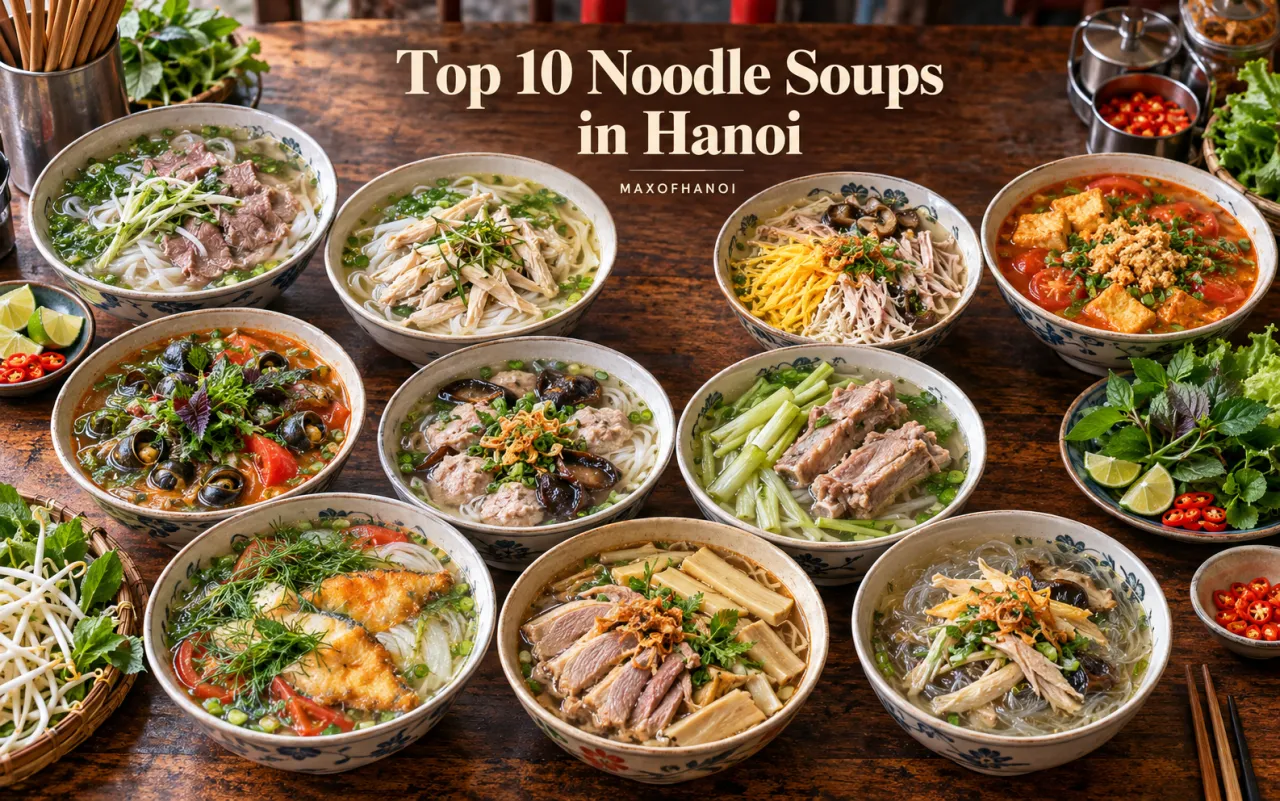
Choose one bowl for your first meal, not all ten. This guide explains the ingredients and textures of ten noodle dishes available in Hanoi; bun bo Hue and banh da cua have regional roots beyond Hanoi. A familiar noodle shape does not tell you what is in the broth.
Choose Your First Bowl
| If You Want | Start by Considering | Check Before Ordering |
|---|---|---|
| A familiar beef or chicken soup | Pho bo / pho ga | Meat cut and preferred preparation |
| A lighter-tasting bowl with several toppings | Bun thang | Chicken, pork, egg and dried seafood can appear together |
| A tangy tomato-and-crab style | Bun rieu cua | Crab, stock and optional toppings |
| A chewy seafood texture | Bun oc or mien luon | Snails / eel, stock and additions |
| Pork meatballs or ribs | Bun moc / bun suon | Bones, meatballs and vegetable additions |
| A bolder regional flavour | Bun bo Hue | Beef, pork and possible shrimp paste |
A mild-tasting broth is not necessarily vegetarian or allergy-friendly. The detailed descriptions below explain common versions; recipes differ between kitchens.
Two Addresses You Can Research
Beef pho: MICHELIN identifies Phở Bò Ấu Triệu, 34 Au Trieu Street, near St. Joseph’s Cathedral, as a beef-pho specialist. See its published description.
Eel noodles: MICHELIN lists Miến Lươn Đông Thịnh, 87 Hang Dieu Street. Its listing describes an eel-focused menu and notes additions such as pork sausage in some preparations. “Eel noodles” therefore does not automatically mean the bowl contains no other meat.
These are independently listed places, not claims of a recent personal visit or a verified shop for every dish below. Save the exact street number and confirm current opening and menu information before going.
Order in Four Steps
- Point to the dish and confirm the portion price: “Bao nhiêu tiền một bát?” — How much is one bowl?
- Explain what you do not eat before the order is prepared. “Không cay” means not spicy; it does not explain an allergy.
- Ask whether the version is nước (soup) or trộn (mixed), and whether toppings are included or extra.
- Taste the broth before adding chilli, vinegar or shrimp paste. Pay attention to small bones where a fish, duck or rib preparation includes them.
If you avoid fish sauce, shrimp paste, eggs, dairy or animal stock, use the vegetarian/vegan guide. For food and water precautions, consult the CDC Vietnam guidance. A popular queue is not a food-safety certification.
The Ten Bowls Explained
1. Phở Bò & Phở Gà — Vietnam’s Signature Noodle Soup
Phở is one of Vietnam’s most iconic dishes, now enjoyed in cities around the world. But no visit to Vietnam would feel complete without trying a bowl in its home country — especially in Hanoi, where Phở is woven into everyday life.
The two main soup varieties are Phở Bò (beef Phở) and Phở Gà (chicken Phở). Both feature soft, flat rice noodles in a fragrant broth. Beef Phở has a richer flavour with warming spices, while chicken Phở offers a lighter, delicate broth, often finished with thinly sliced lime leaves.
Pull up a small stool at a local Phở shop, taste the broth before adding your condiments, and enjoy a comforting taste of Hanoi.
A Little More About “Phở”
The word Phở also refers to the flat rice noodles themselves, so there is more to Phở than its famous soup. You may be surprised to discover Phở Trộn (mixed Phở without broth), Phở Chiên (fried Phở), Phở Cuốn (fresh Phở rolls), and even creative Phở-inspired cocktails. I’ll introduce these other versions in a separate article.
2. Bún Thang — A Delicate Taste of Hanoi
While Phở may be Vietnam’s best-known noodle soup, Bún Thang reveals a quieter, more intricate side of Hanoi’s food culture. Fine rice noodles sit beneath colourful, finely sliced toppings, carefully arranged before a clear, fragrant broth is poured over them.
The Broth — Clear, Gentle & Carefully Balanced
The broth is commonly prepared by gently simmering chicken bones with dried shrimp, creating a savoury depth without a heavy flavour. Some cooks also use dried squid for extra aroma.
The aim is a broth that tastes delicate yet satisfying, allowing the chicken, egg and other toppings to contribute without overpowering one another.
What Goes into the Bowl?
Ingredients vary by shop, but a bowl of Bún Thang may include:
- Bún — Rice Vermicelli: Fine, round rice noodles that form the base of the bowl.
- Thịt Gà Xé — Shredded Chicken: Tender chicken, carefully pulled into small strips.
- Trứng Tráng Thái Sợi — Thinly Sliced Omelette: Delicate ribbons of egg that add colour and a soft texture.
- Giò Lụa — Vietnamese Pork Sausage: Finely sliced sausage with a smooth texture and mild, savoury flavour.
- Tôm Khô — Dried Shrimp: Used to enrich the broth, and sometimes finely prepared as a topping.
- Củ Cải Khô — Dried Pickled Radish: A slightly sweet, tangy accompaniment with a pleasant crunch.
- Hành Lá & Rau Răm — Spring Onions & Vietnamese Coriander: Fresh herbs that give the bowl its distinctive fragrance.
- Nấm Hương — Shiitake Mushrooms: Included in some versions for an earthy, savoury note.
Mắm Tôm — Fermented Shrimp Paste, lime and chilli may be offered for seasoning. The combination of ingredients and accompaniments differs from kitchen to kitchen.
Max’s Tip
Taste the broth before adding anything. If you’d like to try shrimp paste, start with a very small amount — its strong flavour can easily overpower the delicate balance that makes Bún Thang special.
3. Bún Riêu Cua — Hanoi’s Crab & Tomato Noodle Soup
If Phở is known for its fragrant broth and Bún Thang for its delicate balance, Bún Riêu Cua offers a brighter, tangier flavour. Rice vermicelli, freshwater crab, tomatoes and golden fried tofu come together in a colourful bowl full of contrasting textures.
The Broth — Tangy, Savoury & Full of Character
The heart of Bún Riêu Cua is its gently tangy broth, traditionally made with freshwater crab. The crab is pounded and strained, then gently simmered so the crab mixture forms soft clusters on the surface.
Tomatoes bring colour and a natural sweetness, while Giấm Bỗng — Fermented Rice Vinegar adds a distinctive sourness and aroma. Some shops also use pork-bone stock for a fuller flavour.
The result is a broth that feels lighter than its colourful appearance suggests: savoury from the crab, fresh from the tomatoes, and pleasantly sour. A little shrimp paste can add depth, but it is best to taste the soup first and season it to your liking.
Choose Your Toppings
Depending on the shop, you can enjoy a simple bowl or add a generous selection of toppings:
- Riêu Cua — Freshwater Crab: Soft, delicate crab clusters that give the soup its signature flavour.
- Đậu Phụ Rán — Fried Tofu: Golden pieces that soak up the tangy tomato broth.
- Thịt Bò — Beef: Thin slices, briefly cooked in the hot soup.
- Ốc — Snails: Firm, pleasantly chewy bites that contrast with the soft noodles.
- Giò Tai — Pork Ear Sausage: Vietnamese pork sausage with crunchy pieces of pork ear.
- Chả Lá Lốt — Pork Wrapped in Wild Betel Leaves: Fragrant pork parcels that add a richer, savoury flavour.
- Tiết — Cooked Blood Pudding: A traditional topping with a soft texture and distinctive taste.
- Trứng Vịt Lộn — Balut: A fertilised duck egg containing a partially developed embryo — a rich, hearty option for adventurous eaters.
Fresh herbs and shredded vegetables may be served alongside, with lime, chilli and shrimp paste available for seasoning. Toppings vary by shop, so check what is available before ordering.
Max’s Tip
For your first bowl, try the classic crab-and-tofu combination to appreciate the broth, then explore extra toppings according to your appetite and curiosity. Taste before adding condiments — every shop has its own balance of flavours.
4. Bún Ốc — A Tangy Taste of Old Hanoi
Bún Ốc brings together rice vermicelli, pleasantly chewy snails and a gently sour broth. It is a bowl full of contrasts: soft noodles, firm snails, fresh herbs and a bright flavour that makes each mouthful feel refreshing.
The Broth — Light, Tangy & Fragrant
The broth is commonly prepared with the liquid from cooking the snails, sometimes combined with a light stock. Tomatoes add colour and sweetness, while Giấm Bỗng — Fermented Rice Vinegar gives the soup its distinctive tang and aroma.
The balance varies between shops, but a good bowl should allow the flavour of the snails to come through without being overwhelmed by sourness or seasoning.
What Goes into the Bowl?
- Bún — Rice Vermicelli: Soft, round rice noodles.
- Ốc — Freshwater Snails: The main ingredient, with a firm, pleasantly chewy texture. Some shops offer different sizes.
- Cà Chua — Tomatoes: Add colour, sweetness and gentle acidity.
- Đậu Phụ Rán — Fried Tofu: An optional addition that absorbs the broth.
- Tía Tô & Rau Sống — Perilla & Fresh Herbs: Bring freshness and a distinctive herbal fragrance.
Some shops offer extra beef, pork sausage or other toppings. Chilli and shrimp paste may be available for seasoning.
Max’s Tip
Try a simple snail bowl first to appreciate the broth. Add chilli gradually, and enjoy the fresh herbs between mouthfuls.
5. Bún Mọc & Bún Sườn Dọc Mùng — Comforting Pork Noodle Soups
These two bowls share many ingredients and are often served by the same kitchen. Bún Mọc puts the spotlight on springy pork meatballs, while Bún Sườn Dọc Mùng features tender ribs and the distinctive texture of prepared taro stems.
Depending on the shop, you may be able to combine meatballs, ribs and vegetables in one bowl.
The Broth — Gentle, Savoury & Comforting
Pork bones and ribs are gently simmered to create a naturally savoury stock. Pork meatballs may be cooked directly in the broth, adding flavour as they become firm and springy.
Some versions remain clear and mild; others include tomatoes or souring ingredients for a brighter taste. Dọc Mùng — Prepared Taro Stems or Măng — Bamboo Shoots may accompany the pork, depending on the kitchen.
What Goes into the Bowl?
- Bún — Rice Vermicelli: Soft noodles that carry the light broth.
- Mọc — Pork Meatballs: Usually made with seasoned pork paste, sometimes mixed with wood-ear mushrooms.
- Sườn — Pork Ribs: Simmered until tender, with meat that comes away easily from the bone.
- Dọc Mùng — Prepared Taro Stems: Light, spongy pieces that soak up the broth.
- Măng — Bamboo Shoots: Offered in some versions, providing a different texture and flavour.
- Giò Lụa — Vietnamese Pork Sausage: A possible extra topping.
- Hành Lá & Rau Thơm — Spring Onions & Herbs: Add freshness to the finished bowl.
Max’s Tip
If the shop serves both dishes, ask for a combination of Mọc and Sườn. Check whether the day’s vegetables are Dọc Mùng, Măng, or both.
6. Bún Cá — Fish Noodle Soup, with a Choice of Noodles
Bún Cá combines fish, vegetables and noodles in a savoury broth. At many shops, golden fried fish provides a crisp contrast to the soft noodles, while other kitchens use gently cooked fish or serve the fried pieces separately.
The Broth — Savoury, Fresh & Gently Tangy
Fish bones and trimmings can form the base of the broth, sometimes combined with another stock. Tomatoes and souring ingredients create a refreshing finish, while dill, spring onions and seasonal greens add fragrance.
Recipes vary: some bowls are clear and tangy, while others have a fuller, richer broth.
Choose Your Noodles
Some fish-noodle shops offer more than one option:
- Bún — Rice Vermicelli: Round white noodles with a soft texture.
- Bánh Đa Đỏ — Red-Brown Rice Noodles: Flat noodles with a firmer, more substantial bite.
- Bánh Đa Trắng — White Rice Noodles: Flat white noodles offering another texture.
Red and white Bánh Đa are both available at some Hanoi fish-noodle shops, although the choice depends on the restaurant.
What Goes into the Bowl?
- Cá — Fish: Fried or gently cooked, depending on the shop.
- Chả Cá — Fish Cakes: An optional topping with a springy texture.
- Cà Chua — Tomatoes: Bring sweetness and acidity.
- Rau Theo Mùa — Seasonal Vegetables: May include mustard greens or prepared taro stems.
- Thì Là & Hành Lá — Dill & Spring Onions: Add a fresh, aromatic finish.
Max’s Tip
Try Bánh Đa Đỏ if you enjoy firmer noodles. If the fish comes separately, dip a piece into the broth just before eating to preserve some crispness.
7. Bún Ngan Măng — Muscovy Duck & Bamboo Shoot Noodle Soup
Bún Ngan Măng is a hearty bowl featuring Muscovy duck, bamboo shoots and rice vermicelli. The duck has a fuller flavour than chicken, while the bamboo shoots bring texture and a distinctive savoury character.
The Broth — Full-Flavoured & Aromatic
The broth is commonly built around the liquid used to cook the duck, with aromatics such as ginger and shallots. Bamboo shoots contribute their own flavour as they simmer.
Fresh and dried bamboo shoots create different results: fresh shoots tend to have a crisper bite, while rehydrated dried shoots offer a firmer texture and deeper aroma.
What Goes into the Bowl?
- Bún — Rice Vermicelli: Soft noodles beneath the duck and vegetables.
- Thịt Ngan — Muscovy Duck: Sliced or chopped, sometimes served on the bone.
- Măng — Bamboo Shoots: Fresh or dried, depending on the shop.
- Hành Lá & Rau Thơm — Spring Onions & Herbs: Add freshness to the rich broth.
- Nước Chấm — Dipping Sauce: Often served alongside the duck, with ginger, garlic or chilli depending on the kitchen.
Max’s Tip
Check whether the duck is served boneless or chopped on the bone. Taste a piece with the accompanying dipping sauce before adding extra seasoning to the soup.
8. Miến Lươn — Eel & Glass Noodles, Served Your Way
For a different noodle texture, try Miến Lươn. Glass noodles meet flavourful eel, fresh herbs and fried shallots in a dish that can be enjoyed as a warming soup or a mixed noodle bowl.
The Broth — Savoury & Fragrant
For the soup version, eel bones may be simmered with aromatics to create a savoury stock. The preparation varies: some kitchens serve crispy fried eel, while others use softer, seasoned eel.
The glass noodles absorb the broth while retaining their springy texture.
Soup or Mixed?
- Miến Lươn Nước — Eel Glass Noodle Soup: Served in hot broth, bringing the noodles, eel and herbs together.
- Miến Lươn Trộn — Mixed Eel Glass Noodles: Served without broth poured over the noodles, allowing the sauce, herbs and eel to stand out. A small bowl of soup may accompany it.
Miến Lươn Trộn is the brothless alternative rather than a noodle soup, but it is worth knowing about when choosing your order.
What Goes into the Bowl?
- Miến — Glass Noodles: Fine, springy noodles that become translucent when cooked.
- Lươn — Eel: Crispy or soft, depending on the kitchen.
- Hành Phi — Fried Shallots: Add sweetness, aroma and crunch.
- Rau Răm & Hành Lá — Vietnamese Coriander & Spring Onions: Provide a fresh herbal finish.
- Giá Đỗ — Bean Sprouts: Included in some versions for extra texture.
Max’s Tip
Choose Miến Lươn Nước for a comforting soup, or Miến Lươn Trộn if you want to focus on the toppings and contrasting textures. Ask whether the eel is crispy or soft before ordering.
9. Bún Bò Huế — A Bold Taste of Central Vietnam
Originally from Huế in Central Vietnam, Bún Bò Huế brings a different character to Hanoi’s noodle scene. Its fragrant broth, generous toppings and chilli seasoning make it a fuller-flavoured contrast to the gentler northern bowls.
The Broth — Lemongrass, Depth & Warming Spice
Beef and pork bones are simmered with lemongrass to create an aromatic stock. Mắm Ruốc — Fermented Shrimp Paste contributes savoury depth, while chilli seasoning adds warmth.
Some cooks also add Dứa — Pineapple while simmering the broth, bringing a gentle fruity sweetness and a little acidity to balance its richness. This varies by kitchen rather than being an ingredient in every bowl.
The result should balance the fragrance of lemongrass with a rich broth rather than rely on heat alone. Preparations and spice levels vary between kitchens.
What Goes into the Bowl?
- Bún — Rice Noodles: Often thicker and rounder than those used in many northern noodle soups.
- Bắp Bò — Beef Shank: Sliced beef with a firm, satisfying texture.
- Giò Heo — Pork Trotter: A rich addition, usually served on the bone.
- Chả — Vietnamese Sausage or Meat Patties: The variety depends on the kitchen.
- Tiết — Cooked Blood Pudding: A traditional topping offered at some shops.
- Rau Sống — Fresh Herbs & Vegetables: May include bean sprouts and shredded banana blossom.
- Sa Tế — Chilli & Aromatic Seasoning: Added according to your preferred level of heat.
Max’s Tip
If you prefer mild food, ask about the broth’s spice level before ordering and request extra chilli on the side. Add herbs and lime gradually to find the balance you enjoy.
10. Bánh Đa Cua — A Taste of Hai Phong in Hanoi
Originally from the coastal city of Hai Phong, Bánh Đa Cua brings together broad red-brown rice noodles, freshwater crab broth and a colourful selection of toppings. You can also find this regional favourite in Hanoi, where each kitchen adds its own touches.
The distinctive noodles give the dish a different character from Bún Riêu Cua: firmer and more substantial, with a satisfying bite that holds up well in the hot broth.
The Broth — Savoury Crab & Gentle Sweetness
Freshwater crab is traditionally pounded, mixed with water and strained. The liquid is gently heated until soft crab clusters form on the surface, creating the foundation of the soup.
Tomatoes add colour and a light acidity, while some kitchens use pork-bone stock for extra depth. Fried shallots and sautéed crab roe may provide a rich, fragrant finish.
The result is a savoury broth that brings together the sweetness of crab, the freshness of vegetables and the aroma of the toppings.
What Goes into the Bowl?
Ingredients vary by shop, but Bánh Đa Cua may include:
- Bánh Đa Đỏ — Red-Brown Rice Noodles: Broad, firm rice noodles that give the dish its distinctive texture.
- Riêu Cua — Freshwater Crab: Soft crab clusters that contribute flavour and texture.
- Chả Lá Lốt — Pork Wrapped in Wild Betel Leaves: Fragrant pork parcels with a rich, savoury flavour.
- Mọc — Pork Meatballs: Springy meatballs, sometimes mixed with wood-ear mushrooms.
- Rau Muống — Water Spinach: A fresh, lightly crunchy contrast to the noodles and broth.
- Đậu Phụ Rán — Fried Tofu: Golden pieces that absorb the soup.
- Hành Phi — Fried Shallots: Add sweetness, aroma and a crisp finishing touch.
Some shops offer additional toppings or use different seasonal greens, so check the options before ordering.
Max’s Tip
Try a bowl with Chả Lá Lốt if available — its fragrance pairs beautifully with the crab broth. Lift a few noodles with each mouthful of toppings to enjoy the contrasting textures together.
Practical introduction reviewed on 4 November 2026. Existing dish descriptions are retained as descriptions of common versions; ingredients vary by kitchen. The linked venue records support the two named addresses, not a recent on-site inspection of every dish.


Leave a Reply
Your email address will not be published. Required fields are marked *